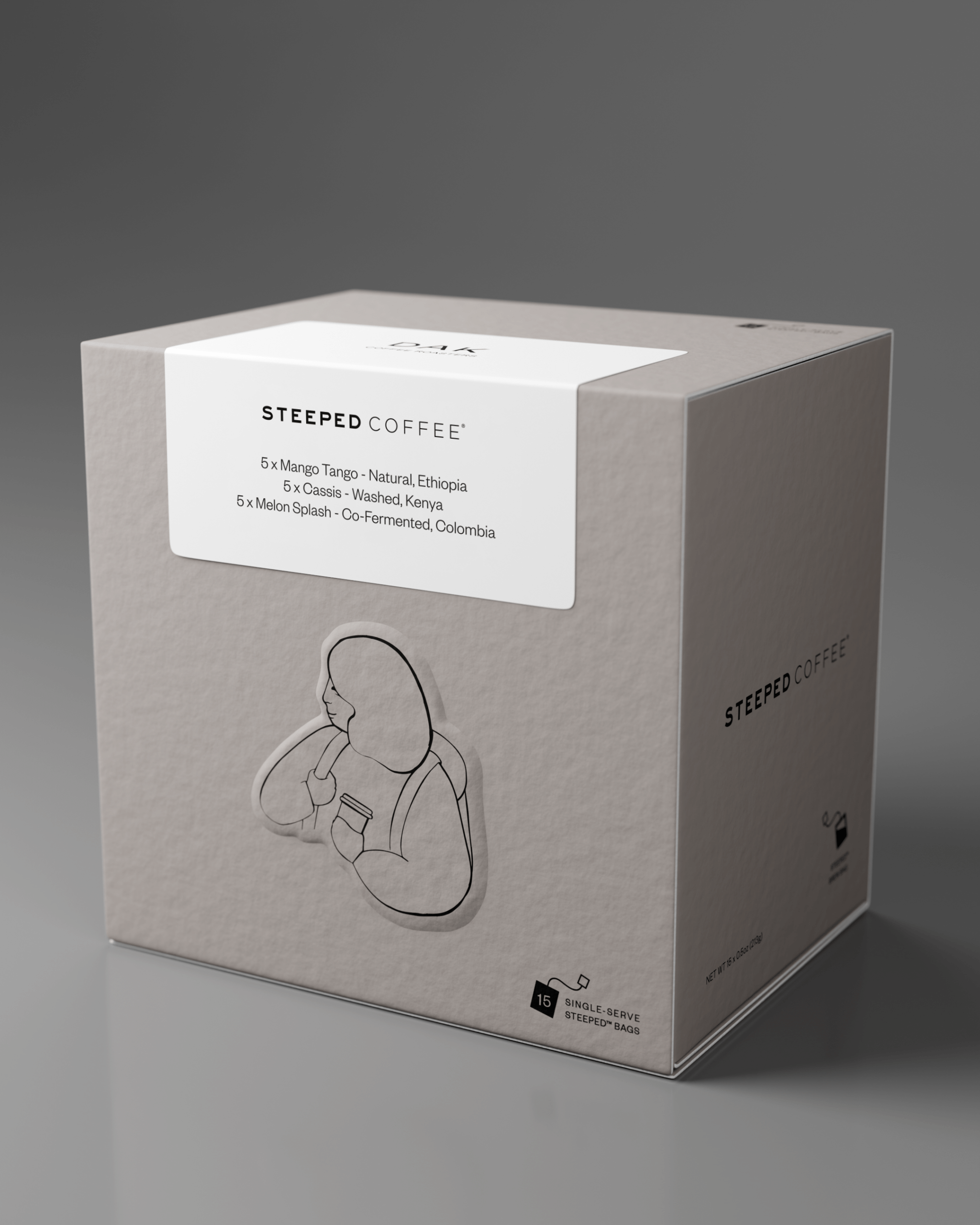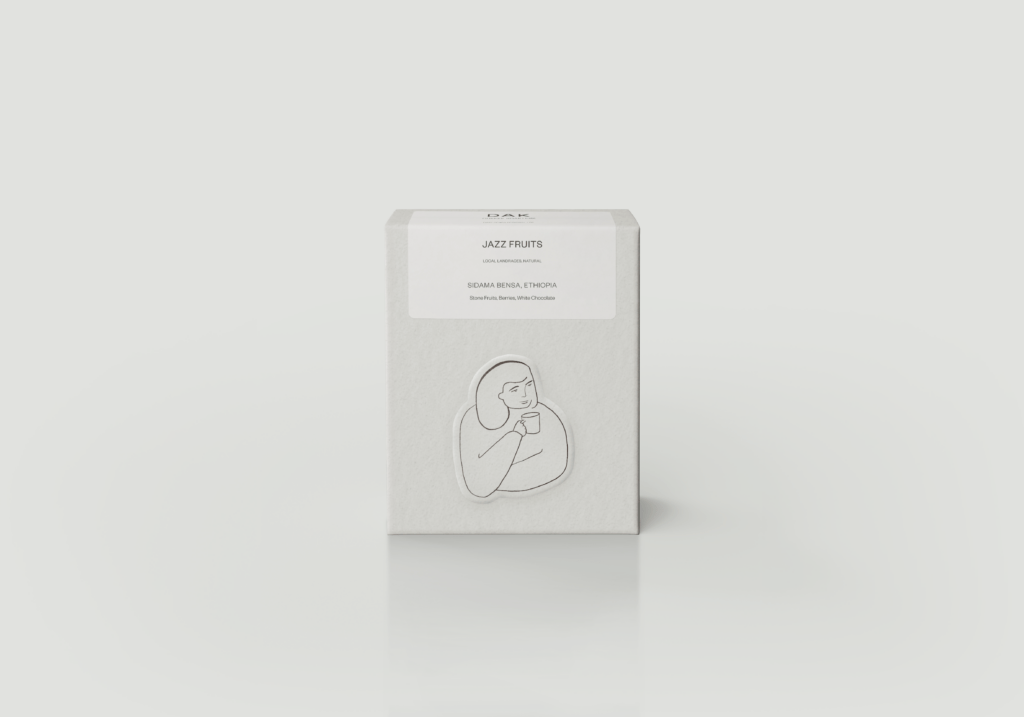
Jazz fruits
Dak's FavouriteRoundSweet
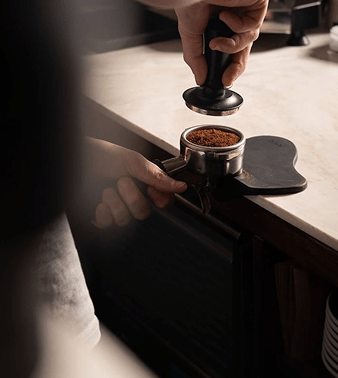
Jazz Fruits is a coffee we try to keep on all year, though that isn’t always possible. We source this community lot from Daye Bensa each year with the same goal: a fruity natural Ethiopian built for espresso, round and sweet, and good with milk too. Strawberry, white chocolate, and mandarin in the cup. Named after the Jazz Fruits playlists on Spotify.
Flavor Profile Round, Sweet
Origin Ethiopia
Region Yirgacheffe
Producer / Farm Community Lot from Daye Bensa
Harvest 2026
Tasting notes Mandarine, Strawberry, White Chocolate
Altitude 2200masl
Varietal Field Blend, Local Landraces
Process Fully natural
Intervention Level Low
FROM ORIGIN TO CUP
Jazz Fruits is one of the coffees we keep in the line-up year-round. It's built on Daye Bensa's community lot: grade 2 naturals selected across several washing stations in Sidama, Ethiopia, and blended to hold a similar profile from one harvest to the next. We buy it again each year when the quality holds and the cup still reads the way we want, some fruitiness, some roundness. The grade 2 is part of why it sits at a lower price than our other Ethiopians, and it's the one we reach for first on espresso and in milk.

Origin
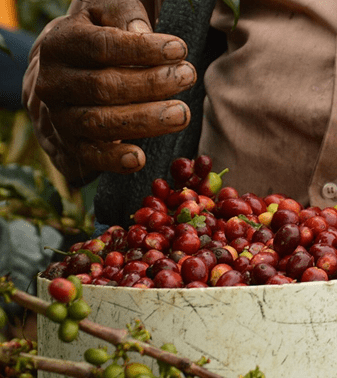
Daye Bensa works across Sidama, Ethiopia, at altitudes around 2200 masl. Cherries mature slowly at that height, which gives the sugars more time to develop before picking. This lot pulls from several stations across the region, so the lot reflects Sidama as a whole. The region runs berry-forward and naturally sweet, and each harvest carries its own version of that.
Varietal
Local landraces: the indigenous varieties that grow across this part of Ethiopia and have never been formally catalogued. They aren't planted in separate blocks but grow mixed together, so a single lot carries several varieties at once. This lot is graded 2, an Ethiopian classification based on defect count rather than flavor.
Processing
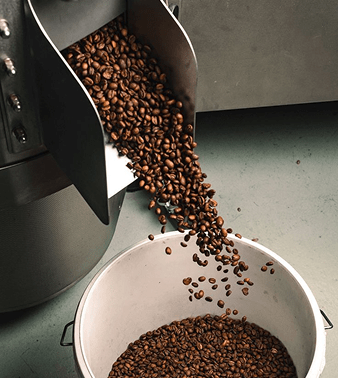
Natural process: whole cherries dry on raised beds with the fruit intact. The longer the seed sits against the drying pulp, the more sugar it takes on, which is where the strawberry sweetness and heavier body come from.
Intervention level
. Low. There's no controlled fermentation here, just careful drying. Whole cherries go onto raised beds and dry under the sun over several weeks, turned by hand so they dry evenly. This is the traditional process across much of Ethiopia. What you taste comes from how the cherries are dried, not from anything done to them before.